
ISI Inspection Report 2010

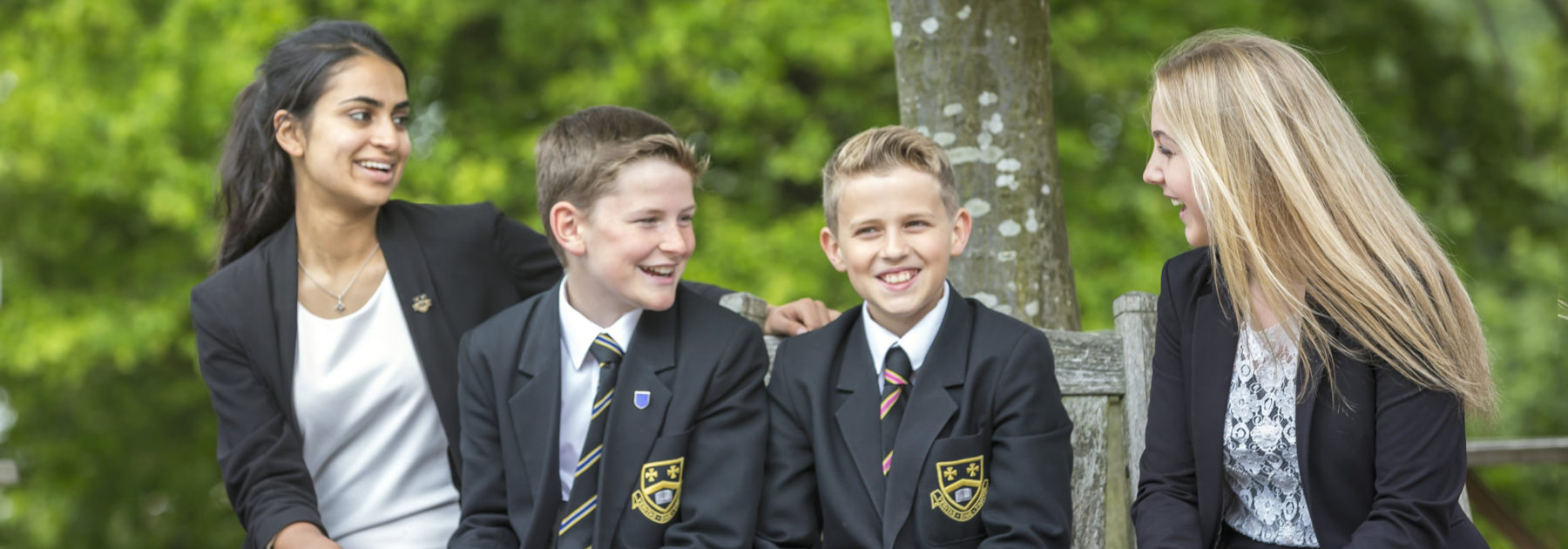
"Pupils have outstandingly well-developed personal qualities and are friendly, outgoing and confident. The school is highly successful in its aim of promoting their strong spiritual, moral, social and cultural development, which is apparent in the responsible and thoughtful way pupils behave and in the pride they take in their achievements."

"Pupils' cultural awareness is strongly developed. They display a welcoming approach towards those from different backgrounds both among their peers and in their meetings with visitors from other cultures and faiths."

"The pastoral care extended throughout the school is excellent, and fulfils the school's aim of creating an environment in which pupils are happy, secure, confident and valued."

"Relationships between pupils and staff, and among pupils themselves, are extremely strong, and a caring and friendly atmosphere is evident throughout the school. The pupils are well mannered, and adults provide them with excellent role-models."

Read more...

Pastoral Care

Caterham School believes in the system of Pastoral Care and we operate the following procedures.

Our Understanding of Pastoral Care

  1. Pastoral Casework - That is individual work with pupils who are having problems be they of an academic, vocational, social, emotional or behavioural nature.
  2. Pastoral Curriculum - This includes both the 'hidden curriculum' that is the ethos of the school, the day to day relationships between staff and pupils, the value system of a school, the opportunities for moral, spiritual, social and cultural development as well as the more formal and overt pastoral curriculum, which would include, though not be limited to, the PSE work whether done by tutors or by subject specialists.
  3. Pastoral Control - That is the discipline system in the school that would include the giving of sanctions but is a much wider concept than that. Good discipline which is consistent, which affirms the pupils' value, which builds rather than crushes, which encourages individuality rather than dull conformity, but all within an orderly environment, is an essential ingredient of effective pastoral care.

Our Pastoral Aims

  1. To enable each pupil to fulfil their own potential both academically and socially.
  2. To ensure that each pupil has access to personal, vocational and academic guidance and support where necessary.
  3. To provide opportunities for and encourage pupils to exercise individual and social responsibility.
  4. To promote in pupils the self-awareness and self-confidence that they need to face the challenges, both academic and personal, that are placed on them.
  5. To establish and maintain an appropriate relationship with every parent, so that together we can help to prepare the pupils for the opportunities, responsibilities and experiences of adult life.
  6. To create a caring environment where pupils are valued for who they are, not just for what they can do.

The Impact of Pastoral Care

As the quality of Pastoral Care improves, so there are likely to be a number of positive outcomes :

  1. Improving the quality of Pastoral Care is an important factor in helping to prevent problems both personal and academic from arising - Good Pastoral Care acts as a fence at the top of the cliff rather than simply providing the ambulance at the bottom.
  2. However good the preventative work at school is, inevitably when dealing with adolescents with all the pressures that they are under internally as well as from home and society at large, problems will still arise, but good quality Pastoral Care will mean that pupils are better prepared to deal with problems when they do arrive.
  3. Good Pastoral Care will raise the standards of behaviour in school. All research clearly suggests that pupils with high self-esteem on average behave better than those with a low self-image. Good Pastoral care defuses rather than escalates situations and leads to enhanced relationships between staff and pupils.
  4. Improving Pastoral Care in a school will lead to higher academic performance. There is no question that pupils with high self-esteem who are essentially content and well-motivated will work better. Students who feel an academic failure will go a long way to fulfil their own feelings.
  5. Improving Pastoral Care will improve the marketing prospects of a school. Parents want to send their children to a school where they will be cared for, where individuals matter, where each child is known and where the children feel that they can talk to the teachers and where the school sees itself in genuine partnership with parents.
  6. Improving Pastoral Care will have a significant impact on staff morale as staff work together as a team with a common purpose.

Responsibility for Pastoral Care It cannot be over-stressed that the pastoral care of all our pupils is the responsibility of the whole community. The way we treat, talk to, interact with and indeed teach pupils will all contribute to the quality of our pastoral care. However, the main focus for Pastoral Care for particular pupils will be their Tutor. At Caterham School the pastoral and academic oversight of every pupil is primarily the responsibility of his or her tutor. All issues regarding a particular pupil should, in the first instance, be directed through their tutor. Tutors will then discuss important issues with the Head of Year.

The Year System

Each child is placed into a Tutor Group. In the Lower School (First and Second Years) Tutor Groups are identified by the initials of their Tutor (e.g. 1B = 1 Bailey). They are made up of pupils in a mixture of Houses. The Tutors in the Lower School work closely with the relevant Head of Year, one of whom, Mrs Tapley, is also Head of Lower School. Pupils in each Tutor Group follow most of the academic timetable as a unit and represent their Houses in intramural competition.

In the Lower School Tutors report Pastoral (including behavioural) and Academic concerns to the Head of Year. Where the pupil is a boarder the Head of the relevant Boarding House will also be informed.

Head of Lower School: Mrs Lydia Tapley

Assistant Head of First Year: Robert Jones

Head of Second Year: Andrew Taylor

Assistant Head of Second Year: Lorne Barnard

In the middle years (Third, Fourth and Fifth Years), pupils are placed in Tutor Groups by Houses. So for example, 3U is all the Third Year pupils in Underwood House. The Tutor is also a member of that House. Tutors in these years report to the relevant Head of Year. Pupils are taught in sets for the core subjects and in mixed ability classes for their option subjects.

Head of Third Year : Marc Broughton

Assistant Head of Third Year: Holly Howden

Head of Fourth Year: David King

Assistant Head of Fourth Year: Miss Aimee Henry

Head of Fifth Year : Mrs Liz Rivers

Assistant Head of Fifth Year : Stephen Lander

In the Lower Sixth and Upper Sixth pupils are placed in Tutor Groups consisting of both day and boarding pupils. The Tutors report to the relevant Head of Year. Mr Lesser, the Director of Sixth Form, has overall responsibility for pupils in this stage.

Head of Lower Sixth : Colin James

Head of Upper Sixth : Tony Fahey

Director of Sixth Form: Michael Lesser

Assistant Head of Sixth Form : Mrs Nicole McVitty

The House System

There is also a strong House tradition and allegiance at Caterham. Houses provide a framework for internal competitions. It is hoped that every child will support his or her House and participate in as many activities as possible.

Day Pupils

House Head of House House Team
Aldercombe Darron Kokott Malcolm Bailey  
Mrs Catherine  Clifton
David King  
John Mansell  
Dan Quinton   
Mrs Cathriona Wallace
Mrs Charlotte Bell
William Jaundrill
Mrs Marilyn Kyle
Kris Waite
Adam Webster
Andrew Patterson
Miss Charlotte Gregory
Harestone Conrad Ware Adam Assen
Mrs Sophie Carpenter
Carlos Garcia
Miss Jaclyn Leach  
Miss Collette Pateman
Mrs Rosie Stowell
Simon Bird
Miss Sophie Day
Colin James
Steven Marlow
Jamie Robinson
Jan Whyatt
Dr Caroline Turk
Lewisham Daryl Todd John Armitage
Miss Anna Church
Mrs Sally Dall’Oglio
Dr Kate Hanford
Mrs Natalie Lomas
Isis Redford
Alex Wood
Marc Broughton
Mrs Arabella Crook
Stephen Gilburt
Stephen Lander
Matthew Owen
Miss Jemma Riches
Newington Rob Clarke Mrs Becky Hunter
David Keyworth
Mrs Nicole McVitty
Revd Dr Rick Mearkle
Miss Alice O’Donnell
Rob Salem
Daniel Timmins
Mrs Catherine Jackson
Holly Howden
Neil Parker
Mrs Lydia Tapley
Mrs Zoe Roberts
Ridgefield Toby Cooper Magnus Anderson
Michael Lesser
James Ogilvie
Mrs Elizabeth Rivers
Stuart Terrell
Ms Elisabeth Gibbs
Mrs Julia Laverick
Miss Lisa McMullin
Mrs Helena Richards
Miss Chloe Searle
Mrs Alex Yankova
Ben Webb
Underwood Jack Birtwhistle Ryan Anderson
Miss Angela Cox
Miss Aimee Henry
Miss Anna Murch
Richard Smith
Miss Hilary Trehane
Mrs Clare Brown
Tony Fahey
Paul Hoad
Miss Sarah Ramsdale
Ben Wilkinson
Mrs Vanessa Mesher
John Weiner

Boarding Pupils

House   Head of House   House Team 
Townsend House
(Junior boys – First to Fourth Year)
Andion Van Niekerk  Mr Lorne Barnard
Mr Alex Moore
Mr Andrew Taylor
Mrs Marie Dodwell
Revd Dr Rick Mearkle
Miss Jess Uden
Viney House
(Senior Boys – Fifth Year and Sixth Form)
Nick Mills  Mr Lorne Barnard
Mrs Clare Brown
Mr Bob Jones
Mr David King
Beech Hanger (Girls) Clare Quinton Miss Rachel Hart
Miss Marie Crick